Cost7 min
Total installed cost: synthetic vs. natural palm over 10 years
The honest comparison is not the price per m² on purchase day but everything the roof will cost across its service life. Here is the model worth building before deciding.
The first budget compares two different things
A natural palm roof and a synthetic thatch roof are not the same product at different prices: they are two different service-life horizons. Natural palm lasts three to five years. Synthetic is warrantied for 20 years against rot, structural panel decay and sudden colour loss. Comparing them on day one is like comparing a rent cheque to a purchase price.
The lines that have to be added up
A ten-year model needs all of the following for each option. The last three rarely appear in the original budget, and they are usually what decides the outcome.
- Material supply, per m² of sloped area plus 10% waste.
- Installation, including the supporting structure on new construction.
- Re-thatching. At a three-to-five-year service life, a natural roof requires two or three full replacements inside a ten-year window. Synthetic requires none.
- Recurring maintenance. Periodic fumigation and partial replacement on natural; none on synthetic.
- Cleaning. Natural palm sheds fibre continuously, with the operating cost that implies when it lands in a pool or a social area.
- Operational closures. Every re-thatching takes the affected area out of service. In hospitality and restaurants that lost revenue routinely exceeds the cost of the work itself.
What changes between the two columns
| Criteria | NIPA synthetic | Natural palm |
|---|---|---|
| Service life | 20+ years, warrantied | 3 to 5 years |
| Replacements in 10 years | None | Two or three |
| Maintenance | None | Periodic fumigation and re-thatching |
| Pests and mold | Immune | Insects, rodents, fungus |
| Loose fibre in the pool | Not applicable | Constant organic debris |
| Look at 10 years | Colour stable | Gray, uneven, with gaps |
Installed cost also falls on the panel side
Format drives labour. NIPA panels are among the largest on the market: fewer pieces per m², fewer fasteners and faster installation, which lowers total installed cost before maintenance is even considered. Each panel takes 7 nails and installs directly over beams or battens, with no sub-roof.
How to present it to the developer
What usually closes the decision is not the accumulated saving but the predictability: the roof stops being a recurring line in the operating budget and becomes a capital investment with a known horizon. That is the argument that survives a financial review.
Keep reading
View all posts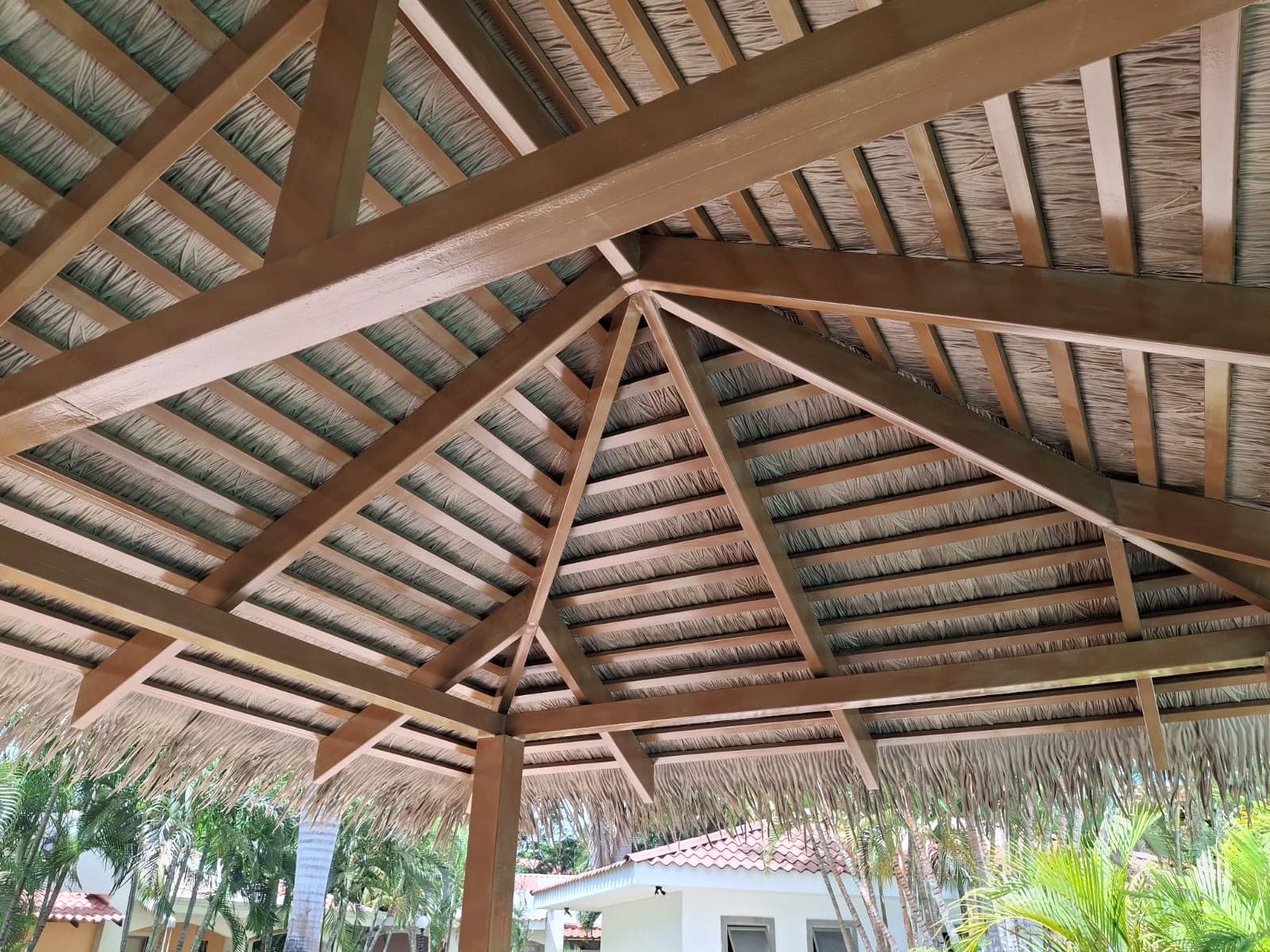
Specification6 min
How to calculate synthetic thatch area from your roof plan
Exposure, overlap, minimum slope and waste: the formula that avoids over-ordering.
Codes5 min
ASTM E108 Class A: what it means for your Costa Rica project
How to present fire testing to the client, the municipality and the insurer.
Installation8 min
Installing over battens: the details that define the finish
Batten spacing, fasteners per panel and ridge capping, step by step.